

Glow-in-the-dark stars were the original bedroom night sky. A pack of plastic stars, some sticky putty and an afternoon on a stepladder got you a ceiling that glowed green for a while after lights out. Plenty of adults still remember exactly where theirs were.
A star projector does the same job with light instead of stickers. Neither is automatically better. They suit different rooms, different ages and different levels of enthusiasm for ladders, so here's an honest look at both.
How Glow-in-the-Dark Ceiling Stars Work
Glow-in-the-dark stars for the ceiling contain a phosphorescent pigment that soaks up light while the room is lit and releases it slowly in the dark. Newer stars use strontium aluminate, which glows brighter and longer than the zinc sulfide found in older ones.
Either way, the glow is strongest right after you switch off the light and fades steadily from there. Within a few hours most are faint. They also only glow if they've been charged, so a room that stays dim all day will give you weak stars at night.
The daytime question
Stick-on stars stay on the ceiling around the clock. In daylight they're pale yellow-green shapes. Some people like that. Others find it looks cluttered, especially in an adult bedroom.
How a Star Projector Does It
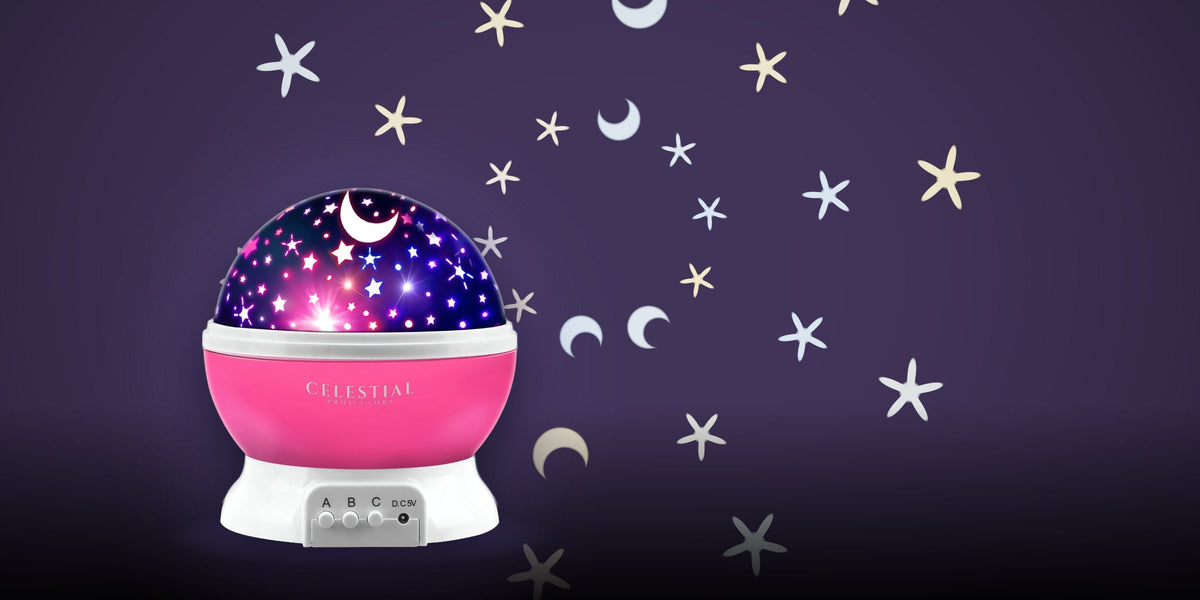
A projector sits on a shelf or nightstand and casts light onto the ceiling. The stars appear the moment it's on, look the same at minute one as at minute fifty, and disappear when you switch it off or the timer ends. Many models add rotation, color and nebula clouds. Browse our star projectors to see the range, from simple star-only lights to projectors with several effects.
Nothing is stuck to the ceiling, so there's nothing to see during the day and nothing to peel off when you move out.
Star-only or full galaxy?
Projectors that put stars on the ceiling come in two broad styles. Star-only models throw a field of points and nothing else, which is the closest match to the simple look of stick-on stars. Galaxy projectors add colored nebula clouds behind the stars for a busier, more colorful sky. If you're replacing a set of glow stars and liked that plain look, start with a star-only model, or pick a galaxy projector that lets you switch the nebula off.
Glow Stars vs Star Projector: Side by Side
| Feature | Glow-in-the-dark stars | Star projector |
|---|---|---|
| Upfront cost | Low | Higher |
| Power | None | USB, plug-in or battery |
| Brightness through the night | Brightest at lights-out, then fades | Steady until switched off |
| Daytime look | Visible stickers on the ceiling | Clear ceiling |
| Installation | Ladder, adhesive, arranging | Set it down and aim it |
| Risk to paint | Adhesive can mark paint or pull texture | None |
| Movement and color | None | Rotation, color modes, nebula |
| Noise | Silent | Usually quiet; rotating models have a small motor |
| Control | Glows whenever charged | Remote, timer, brightness |
| Real constellations | Possible if you place them from a chart | Only with a planetarium projector |
When Glow-in-the-Dark Stars Make More Sense
- You're on a tight budget or just want to try the look before spending more.
- A child wants to design their own ceiling. Arranging stars together is a fun weekend project, and kids tend to be proud of the result.
- There's no outlet near the bed and you don't want a battery unit to keep charged.
- Any running device bothers you. Glow stars make no sound and have no standby light.
- You want a permanent constellation. With a star chart and a pencil, you can place stickers to match the real Big Dipper or Orion above the bed.
When a Star Projector Makes More Sense
- You rent, or the ceiling is textured. Nothing gets stuck, so nothing gets damaged.
- You want stars that last until you're asleep. A projector stays steady for as long as the timer runs.
- It's an adult bedroom. A clean ceiling by day and a starry one at night is hard to get any other way.
- You want movement, color or sound. Our Bluetooth and white noise projectors add music or sleep sounds to the stars.
- You're building a bedtime routine for a child. Star projectors for kids with auto-off timers give the stars a clear start and finish.
- You want real constellations without a ladder. A planetarium projector shows actual star maps and can switch between them.
Tips If You Go With Stickers
- Test the adhesive first. Press one star onto an out-of-the-way spot and remove it a week later to see how your paint reacts.
- Be careful with textured ceilings. Putty can pull popcorn texture away when you remove it. That alone is a strong argument for a projector.
- Cluster them. The real sky isn't evenly sprinkled. Groups of stars with empty space between them look far more natural than a grid.
- Charge them before bed. A few minutes with the main light on helps a lot on dim days.
- Keep small stars away from toddlers. Loose stickers are a choking hazard, so do the install when little ones are elsewhere and don't leave spares lying around.
Tips If You Go With a Projector
- Keep the ceiling light. White or pale gray matte paint shows stars and color best.
- Place it across the room. A dresser on the far wall, angled up, spreads the stars over the bed better than a nightstand aimed straight up.
- Use the timer. Thirty to sixty minutes is plenty for falling asleep.
- Tidy the cord. Run it along the back of the furniture and the baseboard with adhesive clips.
- Respect the lens. The lasers and LEDs in our projectors are consumer products, but never look directly into the lens, and keep the projector out of reach of small kids.
Can You Use Both?
Yes, and it works well in kids' rooms. Put a small constellation of glow stars right above the bed, something familiar to look at when the lights go out, and use a projector on a timer for the bigger show at bedtime. You keep the tradition and get the effect without covering the whole ceiling in stickers.
Our Take
Glow-in-the-dark stars are cheap, charming and a little nostalgic, and they make a great project with a kid. For a clean ceiling, steady light, color and movement, a star projector wins. If you're torn, try a projector first. It won't cost you any ceiling paint, and you can always add a few stickers later.
FAQ
How long do glow-in-the-dark ceiling stars glow?
It depends on the pigment and how well they were charged. They're brightest right after lights-out and fade steadily, and most are faint within a few hours. Newer strontium aluminate stars last longer than older types.
Do glow-in-the-dark stars damage the ceiling?
They can. Adhesive putty sometimes leaves marks, lifts paint or pulls texture off popcorn ceilings. Test one star in a hidden spot first, or choose a projector if you rent.
Can a star projector stay on all night?
Many are designed for long run times, but check your manual. A 30 or 60 minute timer is usually enough to fall asleep under, and it saves the projector from running until morning.


