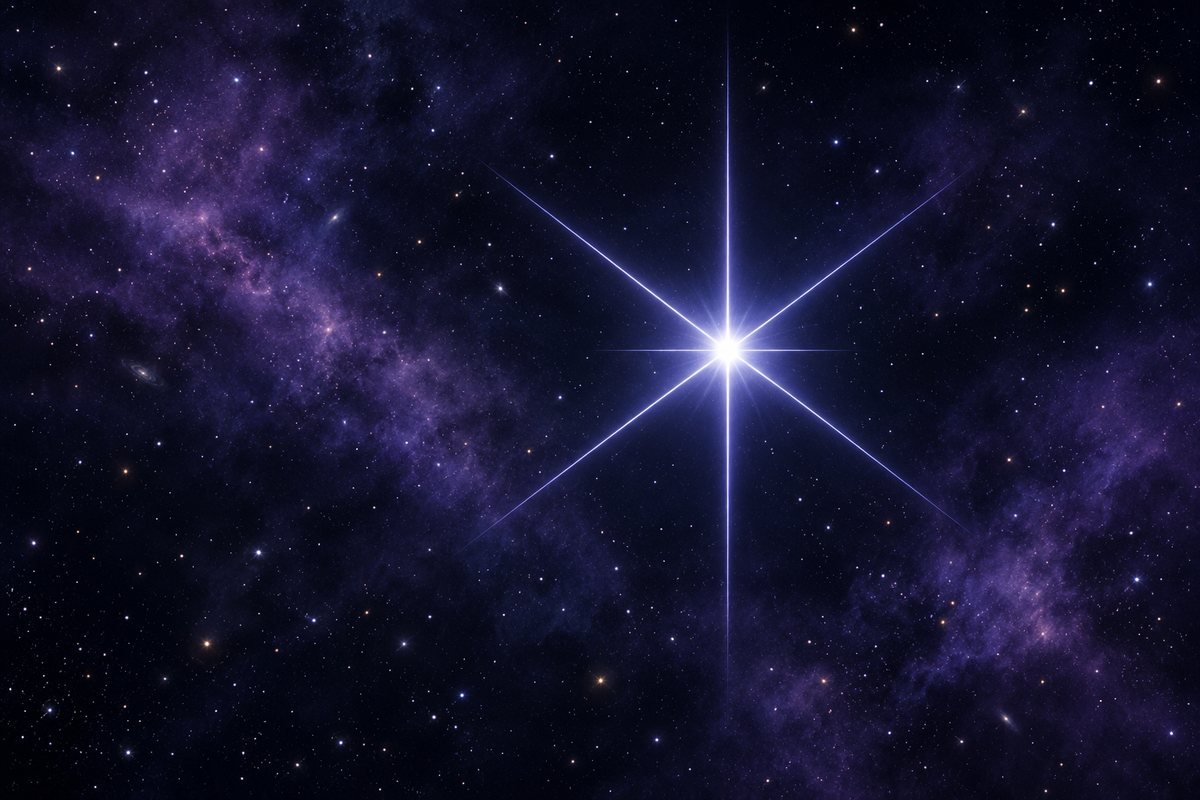
A star seems to brighten, fade and shimmer while a decorative star on the ceiling holds its place. Both can make a room feel connected to the night sky, but the resemblance raises a useful question: what makes a real star twinkle?
For the familiar rapid twinkle seen from the ground, look much closer to home than the star itself. Earth's moving atmosphere changes the way distant starlight reaches your eyes. A projector's programmed sparkle may imitate the appearance, but it is not the same process.
The atmosphere changes the view
NASA's StarChild explanation of twinkling describes starlight being slightly bent as it travels through moving air. Some light reaches the observer while some is redirected. As the air changes, the apparent brightness changes too.
A helpful way to phrase this is that the view of the star is fluctuating. It is not evidence that the star is repeatedly switching off and on. Keep the star, the atmosphere and the observer separate in your explanation; each has a different role.
You can sketch those three parts on paper without drawing a complicated optical diagram. Put the distant star at one end, the observer at the other and a band labeled atmosphere between them. Add a note that the drawing is conceptual and not to scale. The useful point is where the changing view originates.
Why planets often look steadier
Light from a planet also crosses Earth's atmosphere, so simply saying that planets avoid the air would be wrong. The difference involves the apparent size of the source on the sky.
NASA's Ask an Astrophysicist discussion of stars and planets explains that a star is effectively point-like in this comparison. A planet has a larger apparent disk, even if your unaided eye does not resolve that disk. Light arriving from different parts of it experiences different atmospheric disturbances, which tend to average out.
This is why planets often appear steadier than stars. Use it as an explanation of a tendency, not a stand-alone identification test. “That looks steady” is an observation; “that is a particular planet” needs a reliable sky reference for your place and time.
Notice where the star sits in the sky
The StarChild guide also explains why stars near the horizon tend to twinkle more: their light travels through more atmosphere before reaching you than light from higher in the sky. A low star's lively appearance can therefore tell you about the viewing path rather than unusual activity at the star.
For a short evening activity, choose a comfortable outdoor viewing spot with an unobstructed route back inside. You do not need a telescope. Write down the date, time and whether the point you are watching is low or high in the sky.
Describe what you notice before looking for a name. You might write “rapid shimmer,” “mostly steady” or “clouds interrupted the view.” If you cannot see a clear difference, record that honestly. The notebook is more useful when it contains observations rather than the result an explanation led you to expect.
Do stars ever change brightness themselves?
Yes. Explaining ordinary atmospheric twinkling does not mean all stars maintain exactly the same brightness. Astronomers also study changes that originate in the stars themselves.
NASA's feature on stellar sound waves describes very small brightness variations associated with stellar vibrations and how space-based observations help researchers study them. Those measurements answer a different question from watching a star shimmer through Earth's air.
When reading an astronomy headline about a star's changing light, check what was measured and by which instrument. Do not assume every mention of flickering or variability refers to the familiar twinkle outside your window. The words can sound similar while describing different physical effects.
Bring the question back to your starry room
Use a decorative projection as a prompt for the conversation, then look to the astronomy sources for the explanation. A ceiling pattern can be beautiful without reproducing the atmosphere, the distances between stars or tonight's sky.
The Galaxy Star Projector with Remote Control, for example, belongs to a room-lighting setup. Check its product description and instructions for the available effects. A setting described as twinkling or breathing would be an effect produced by the device, not a measurement of a real star.
Compare the descriptions rather than trying to force a physical demonstration. “The device changes its effect” and “moving air changes the arriving starlight” are two different explanations. There is no need to put water, steam, smoke or another improvised material near a projector to illustrate the difference.
Keep one question for the next clear night
Before finishing, try explaining the twinkle in a single sentence: moving air changes how distant starlight reaches an observer on Earth. Then choose one question for another evening, such as whether a lower star appears more restless than a higher one.
Keep the observation notes beside your space books or favorite decorative light. The room supplies the atmosphere for curiosity; the real sky supplies something new to notice. You can enjoy both without asking the projector to be a scientific instrument.
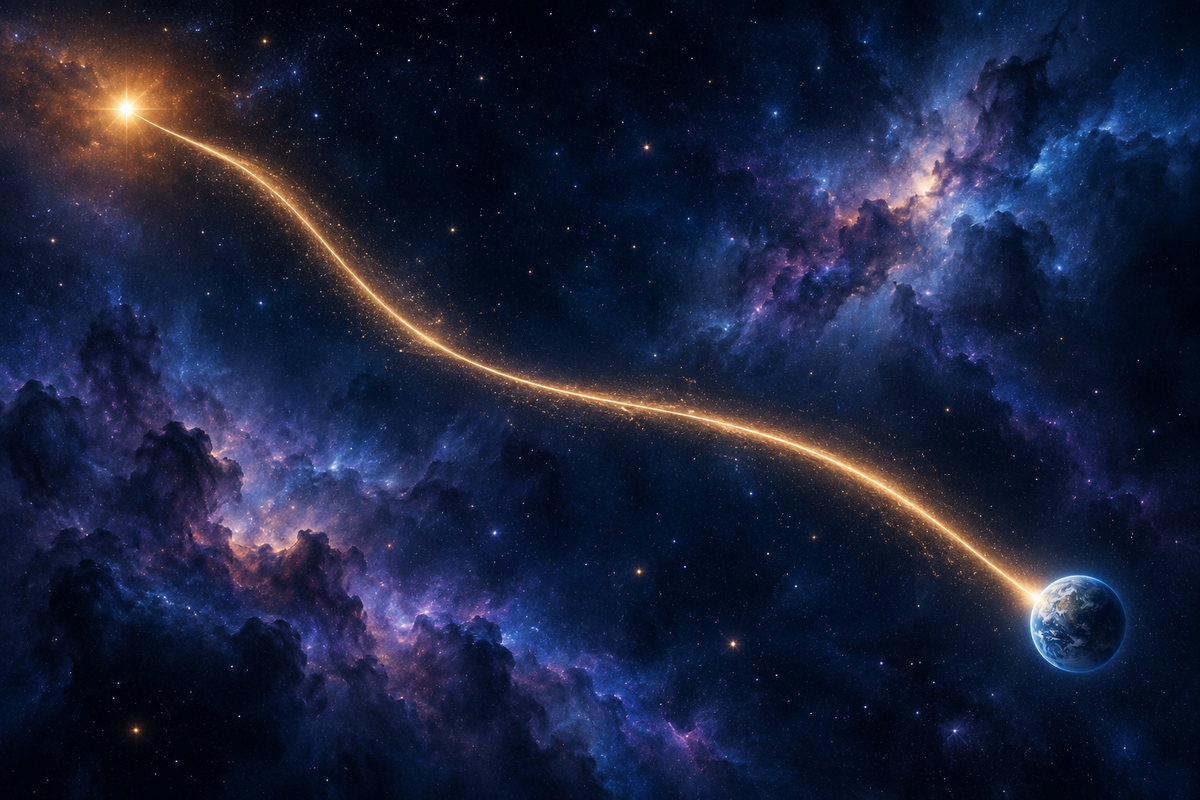
Cover: an original conceptual illustration of starlight passing through atmospheric layers, not telescope data or a measured ray diagram.