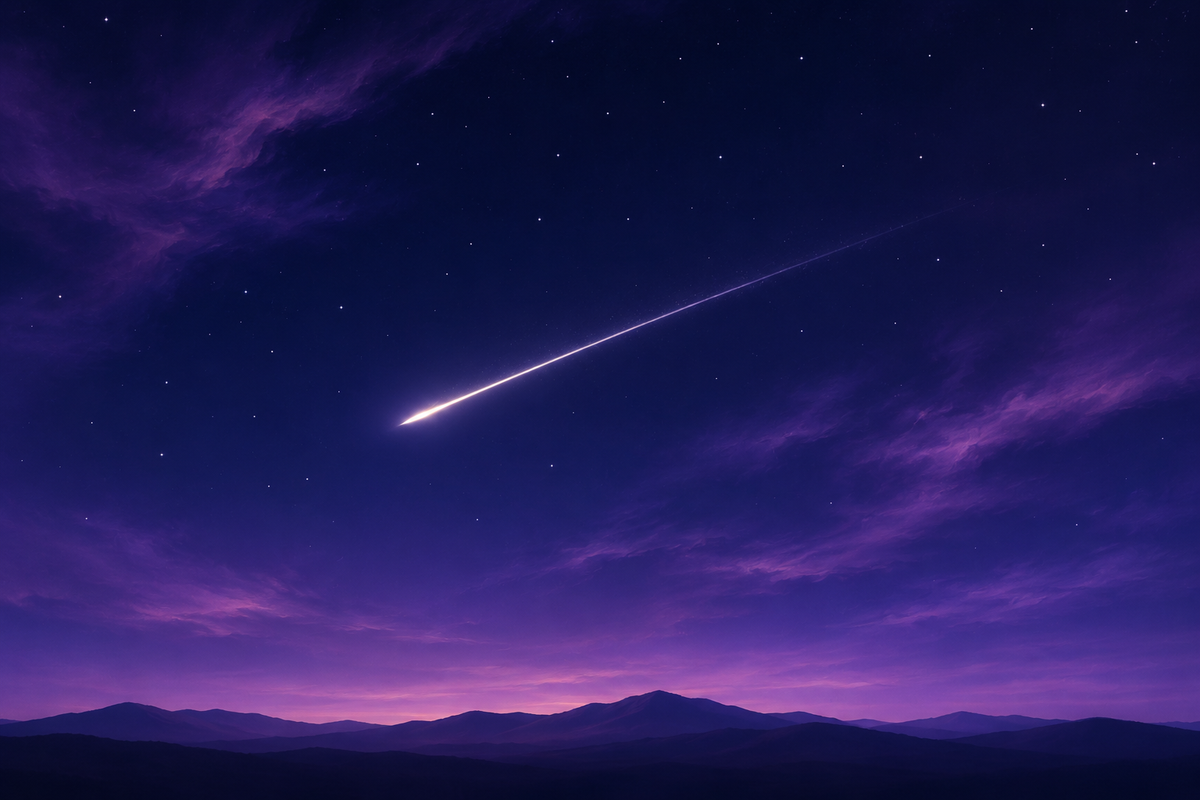
A brief streak crosses the night sky, and someone calls it a shooting star. The nickname is familiar, but it can leave a misleading picture: a star has not broken away and fallen toward your garden. The event belongs to a different family of objects and observations.
Meteoroid, meteor and meteorite sound almost interchangeable. A useful way to separate them is to ask two questions: where are we looking, and are we naming a physical object or the light it produces?
Three words, three different descriptions
NASA's overview of meteors and meteorites distinguishes the terms this way:
- Meteoroid: a small piece of material still traveling through space.
- Meteor: the visible streak associated with material entering the atmosphere at high speed.
- Meteorite: material that survives the passage and reaches the ground.
The middle word is the easy one to muddle. A photograph of a bright line in the sky records a meteor. A specimen in a museum case may be a meteorite. Those are different kinds of evidence, even when the story begins with the same incoming material.
A shooting star is not a falling star
In its meteor questions guide, NASA describes meteoroids as small rocks or particles, usually pieces of a comet or asteroid. The meteor is the light seen when one enters Earth's atmosphere and disintegrates. The familiar nickname describes the appearance rather than identifying the object as a star.
That distinction helps when you are explaining a picture to someone else. Start with what the picture actually shows. Is it a streak in the atmosphere, an artist's illustration of a rock in space, or a photographed specimen on a table? A dramatic image can be useful, but its caption should do the identifying.
A shower does not mean rocks raining onto the lawn
NASA's meteor questions guide explains that a meteor shower involves material with a common origin and similar orbits entering the atmosphere. The word shower refers to the observed meteor activity. It does not mean that every visible streak ends with a collectable stone nearby.
Do not add a landing point to an observation simply because the streak seemed to point toward a hill or building. A description such as “a bright streak moving across the view” records what you saw. “It landed behind that house” is a much stronger claim and needs evidence that the view alone does not provide.
Try a three-card explanation indoors
Write the three terms on separate cards. On another sheet, draw three simple scenes: a small dot in space, a line in a sky above a horizon, and a stone beside a museum label. Keep the drawings schematic. You do not need a realistic fireball or a scale model.
Match each card to its scene, then explain why it belongs there. Ask the learner to say whether the card names material in space, the atmospheric light event, or surviving material on the ground. Swap the cards and repeat the explanation without relying on their original left-to-right order.
For a final check, introduce a sentence: “We watched a meteor and later saw a meteorite in a museum.” Ask whether the sentence proves the museum specimen came from the event you watched. It does not. Matching terminology is different from establishing a shared history.
Use a starry room as the setting, not the evidence
A decorative projector can make a pleasant backdrop for the activity. Our sitting astronaut nebula projector is described as providing color-changing nebula effects. That is room lighting, not a recording of an actual meteor or a prediction of what will appear outside.
Keep enough ordinary light on to read the cards, and use the device according to its instructions. If a projected scene includes moving points or streaks, check the product's description before assigning scientific meaning to them. You can enjoy the effect without treating every light pattern as an astronomy diagram.
The short version is easy to carry into the next conversation: material in space, light in the atmosphere, surviving material on the ground. Start there, then let a reliable caption or reference supply the details.
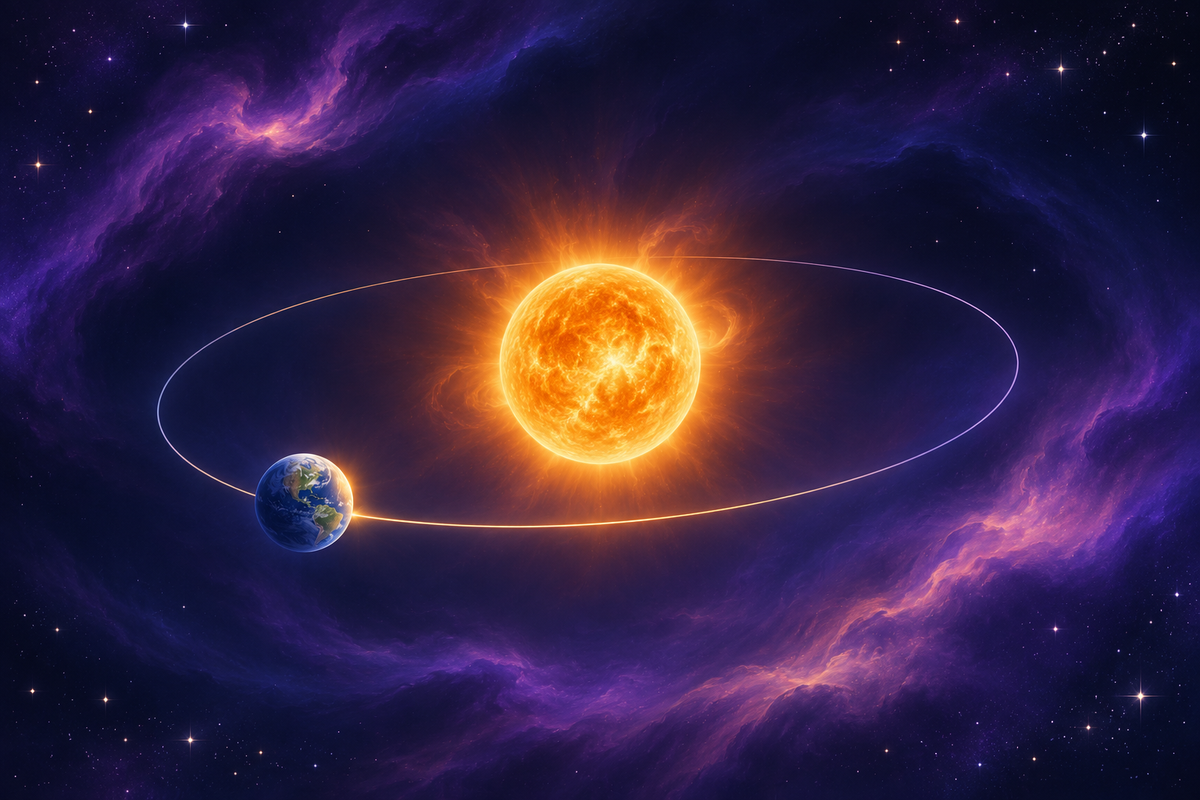
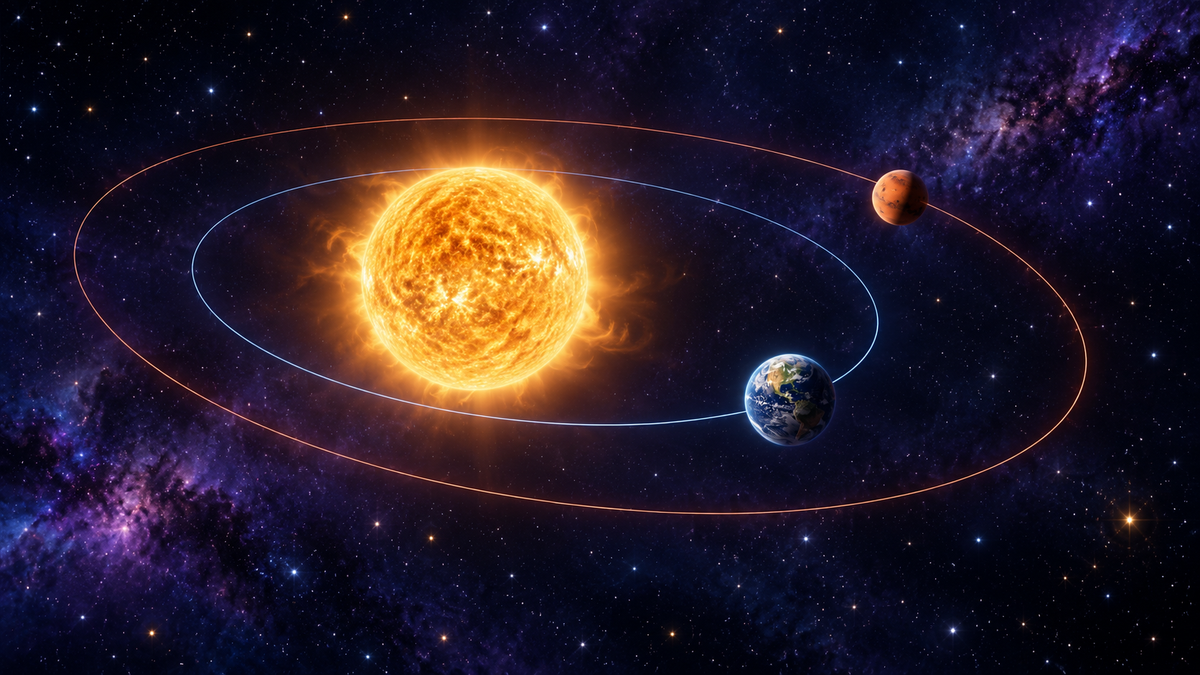
Cover: original conceptual illustration, not a photograph of a particular meteor or a prediction of viewing conditions.