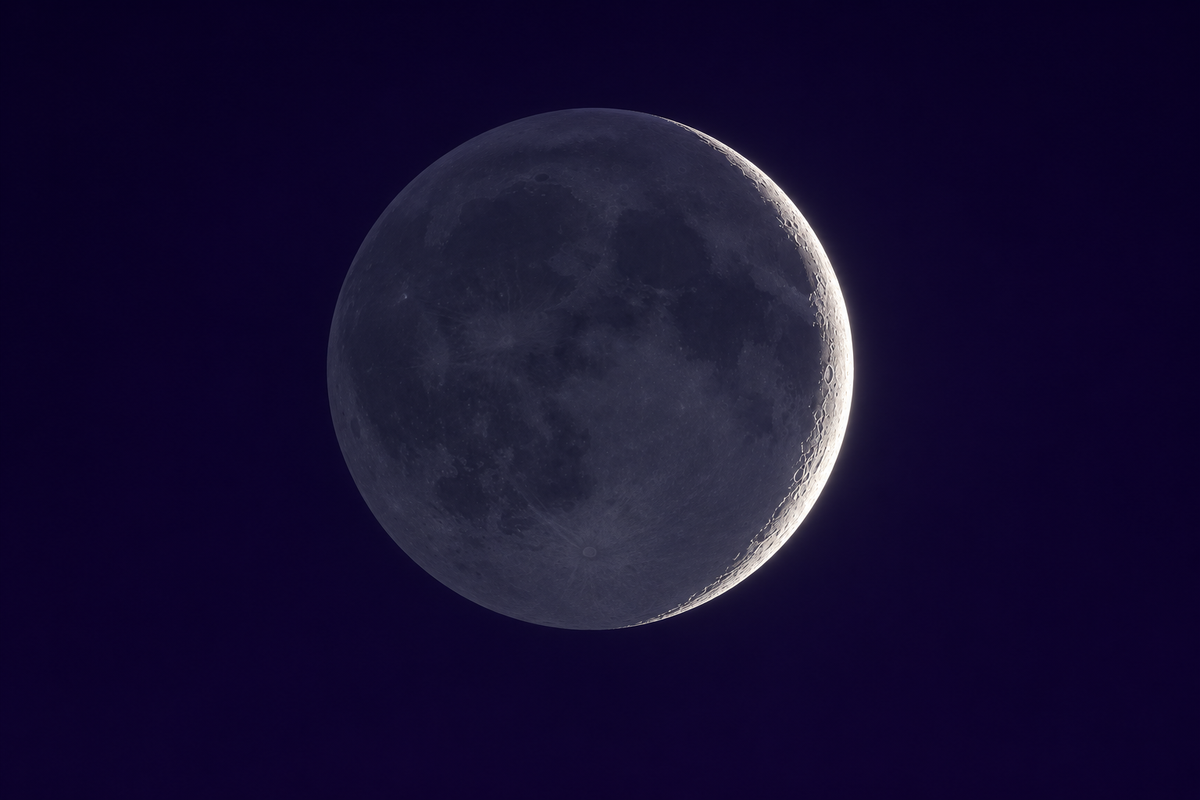
A thin crescent Moon can look like two pictures layered together. There’s the obvious silver curve, and then, if the sky is dark enough and you look patiently, there’s a softer gray disk completing the circle. That faint glow is called earthshine. It isn’t the Moon making light. It’s seeing sunlight that has taken a detour.
Follow the two light paths
On the bright crescent, sunlight hits the Moon directly and some of it bounces back toward us. On the dimmer part, sunlight first hits Earth. Some of the light Earth reflects reaches the Moon’s night side, and a little of that light reflects back to us. The extra reflection is why the second part looks far less bright than the crescent. NASA’s Moon phases guide shows the effect in an actual image of a crescent Moon.
That second route explains a small puzzle: if the lunar surface itself isn’t directly sunlit there, why isn’t it completely invisible? The Moon’s near side can still receive reflected light from the planet it faces. “Night side” in this explanation means the side currently out of direct sunlight, not the side permanently hidden from Earth.
What would Earth look like from there?
Imagine swapping places with someone on the part of the Moon visible from Earth. When the Moon looks like a thin crescent from here, Earth looks almost full from there. A large fraction of the Earth facing the Moon is sunlit. That geometry makes a crescent a good time to notice earthshine here, even though the effect is easy to miss in a bright sky.
A full Moon offers the opposite visual problem. The near side of the Moon is bright with direct sunlight, so there isn’t a big unlit patch on the visible disk to set off that softer gray glow. You don’t need to look for the Moon’s far side, either. Both the bright crescent and the gray remainder you see belong to its Earth-facing disk.
Try a five-minute observation
- Pick a clear evening when your local Moon calendar shows a young waxing crescent. Wait until the Sun has set, then find a spot with a clear western view.
- Start with the crescent, then look just to the dim side of it. Ask yourself whether you can trace the rest of a round edge. If twilight, haze or a low horizon hides it, try another evening rather than treating that first view as definitive.
- Sketch the curved bright part and the outline separately. Make a note of how far the Moon was above your horizon and how bright the sky was.
Build a version you can explain
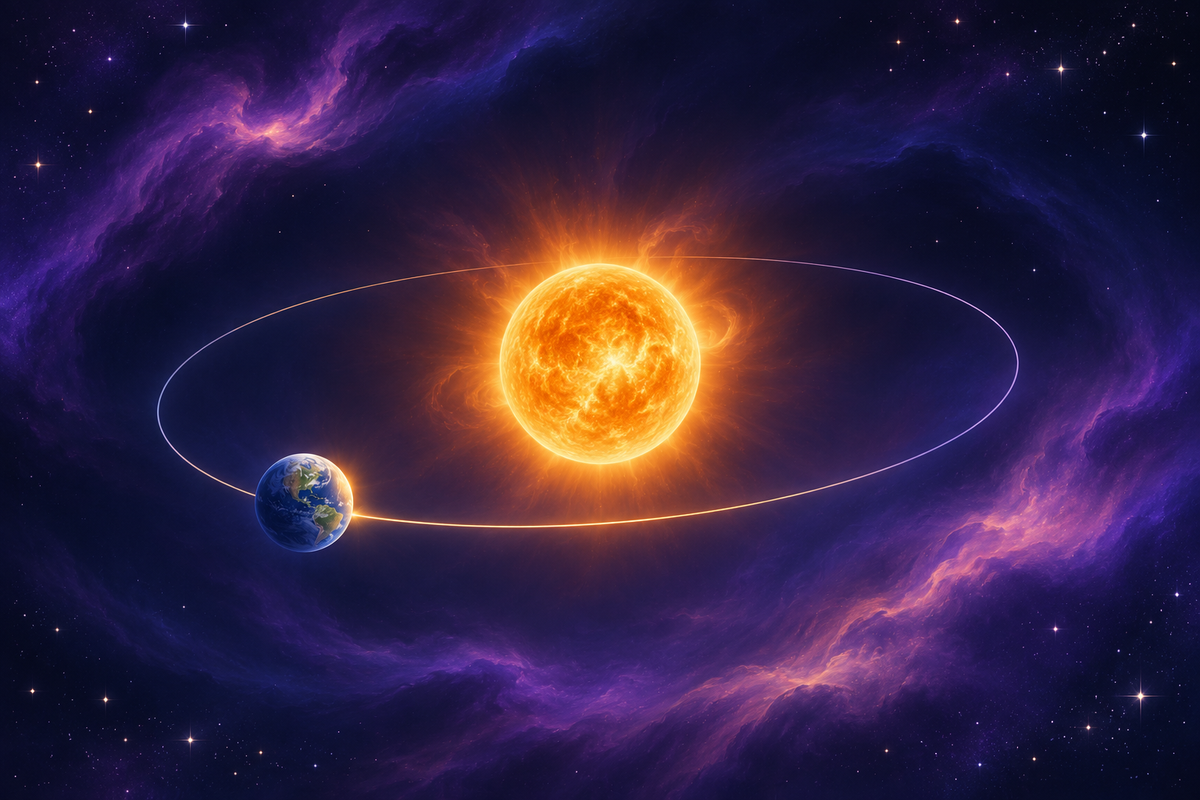
Draw three circles labeled Sun, Earth and Moon. Use a thick arrow for the Sun-to-Moon route. Use a thinner arrow for the route from Sun to Earth to Moon, then one more arrow back to Earth. The drawing will not be to scale, but it will answer the key question: where did the light on the dim portion come from?
A moon lamp or a projector can set the scene indoors; its brightness controls don’t demonstrate the real brightness ratio. Pair the drawing with the sky observation and keep those two things separate. The useful memory aid is simply this: the bright bit gets sunlight directly, and the quiet gray bit borrows some from Earth.